


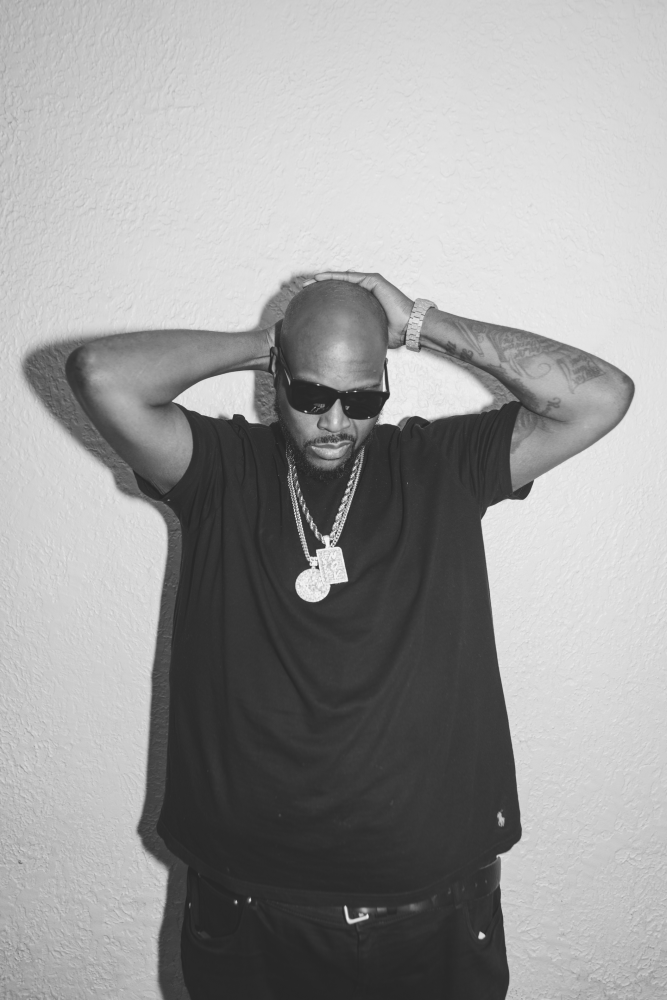
STEELYONE moves with the weight of a city behind him. Coming up in New Rochelle, NY, just minutes outside of the Bronx, Hip-Hop’s birthplace, he’s carving out a lane of his own. On Therapy, Steelyone’s reflects on his healing journey in a world that rarely makes space for men to reveal their pain. Beyond the music, his vision expands to include Stainless Brand Clothing, a lifestyle fashion imprint centered on stay true to self. With new projects on the horizon and momentum building beyond city limits, Steelyone is stepping into his next chapter with purpose, clarity, and ambition.
Before the stages, the studio, and the releases, what moment made you realize you wanted to become a Hip-Hop artist instead of just a listener?
I got introduced to Hip-Hop through my older brothers. They were both heavy into it, and one of them rapped, so that was my first real doorway into the culture. But the moment I knew I wasn’t just supposed to listen? That came from something deeper. I think I’m addicted to creating — taking nothing and turning it into something. Creating feels like my way to reach people, to communicate, to find these pockets where we can build, connect, unify. That love for creation is what made me step from the listener’s side into the artist’s seat.
New Rochelle sits in a unique space culturally. How did your environment shape the way you create?
New Rochelle is a unique place. We’re five minutes from the Bronx, but our story isn’t the Bronx’s story. When it comes to music, we don’t have a direct pipeline straight into the industry at all. And musically, nothing major has come out of New Rochelle in almost three decades. That creates a different kind of pressure — it makes you feel like you’re carrying something for a city that’s been quiet for too long.
Compared to other suburbs in Westchester, we’re respected in certain ways, but we’re also sort of left astray. Because of that, we’ve built our own Vibe — our own writing style, our own slick talk, our own fly energy. New Ro has some incredibly talented people; we just haven’t gotten our full credit yet. That’s where my hunger comes from.
We’re diverse, cultured, creative, and full of personality. All of that shaped the way I create and the way my music sounds today.
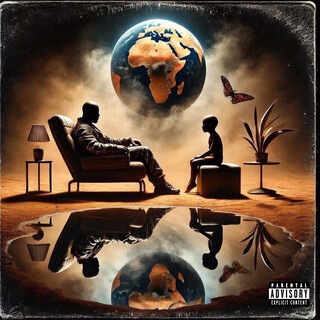
The Therapy project feels personal in a different way. What layers of yourself were you intentionally ready to show the world this time that you had not before?
I’ve been in therapy for the last four years. I’m Jamaican-American, and in our culture — honestly, in a lot of Black and urban communities — therapy isn’t something that’s really championed. It’s not promoted as the thing you run to. But therapy ended up helping me in ways I didn’t expect. It revealed patterns in my life that were scary to face, things that finally had a name, a diagnosis, or a remedy. It forced me to confront parts of myself I’d been avoiding.
I originally went to therapy to learn how to communicate better with the people I love — my family, my mother, my brothers, my daughter. I wanted to be a better father, a better son, a better brother… just a better human being. I realized along the way that I had mastered burying emotions. I hid things in my work, in my grind, in my silence. Music has always been my therapy, but it wasn’t enough — because not everything is a song. Some things you need to actually say.
Therapy also showed me how much I looked for validation and acceptance from people. That was a hard thing to admit. But I found strength in vulnerability. I was ready to talk openly, to stop hiding how I felt, and to stop pretending certain things didn’t affect me.
On the project, that is my real therapist in the skits. I wanted the project to feel honest, not just artistic. And when it dropped, I had a lot of men reach out to me saying the music opened them up Pause! lol. — it was like they were having therapy through the songs. But when I told them to actually go to therapy, they were like, “Nah, I’m good,” which is exactly why I felt the project was necessary.
So the new layer I showed was the part of me that was ready to admit I don’t have it all figured out — the part willing to be vulnerable, to confront myself, to grow, and to let people hear the truth behind the man, not just the music.
Stainless Brand Clothing feels like more than merch. What story are you trying to tell through the brand, and what does “Stainless” symbolize in your own life?
Stainless is definitely merch, but for me it’s also another form of expression. I’ve always been into fashion. And being a bigger dude, I didn’t always have access to the same clothes or the same fly pieces other people could walk into a store and grab. That pushed me to create my own lane, my own look, my own threads.
I realized early that merch sometimes gives you more room to speak than music does. A quote on a shirt can hit just as hard as a verse. A design can tell a whole story without needing a beat behind it. A lot of what I put on my merch are pieces of my life, my thoughts, my philosophy — things I want to share with the world.
“Stainless” is personal. To me, it symbolizes moving through life without letting the world stain you — staying solid, staying true, staying clean in your character even when life gets messy. It’s about integrity, resilience, and identity. And fashion is my way of bringing that message to life visually.
I’m a big dude and a fashion-forward dude. Creating Stainless allows me to express my passion and my art in a way that feels authentic to who I am, while giving other people something they can wear that represents strength, individuality, and purpose.
In what ways do your music and Stainless move together?
I always say I am Stainless and Stainless is me. And that’s not a slogan — it’s really a mindset. Stainless is about the belief that none of us are born with flaws, scars, or defects. God doesn’t make mistakes. The things that make you different aren’t stains on you — they’re what make you beautiful. They’re what make you you.
That same message lives in my music. I talk about identity, struggle, healing, faith, and resilience. I try to remind people that they’re worthy, that they’re not broken, that their story has value. And every artist on Stainless carries that same energy in their own way. The music and the clothing both push the same idea: we’re not here to hide who we are — we’re here to stand in it proudly.
Stainless is the message. The music is the heartbeat behind it.
What does the next year of your career look like?
Next year, for me and for Stainless, is about keeping the same momentum but aiming for bigger platforms. We’ve got about four projects dropping — including releases from the other artists on Stainless — so the workload and the output are only going up.
The more I learn about the business, the more I realize we’re not doing anything wrong. We were just thinking too small. Now it’s about expanding our perspective, moving with confidence, and taking the good with the bad without losing the energy that got us here.
I’m stepping into the next year focused on growth, visibility, and discipline. And I remind myself — and my team — that comparison is the thief of joy. The only person I’m competing with is who I was yesterday.
Listen to and download Steelyone’s music on Apple Music and Spotify. For more on Stainless, visit stainlessbrandclothing.com.