


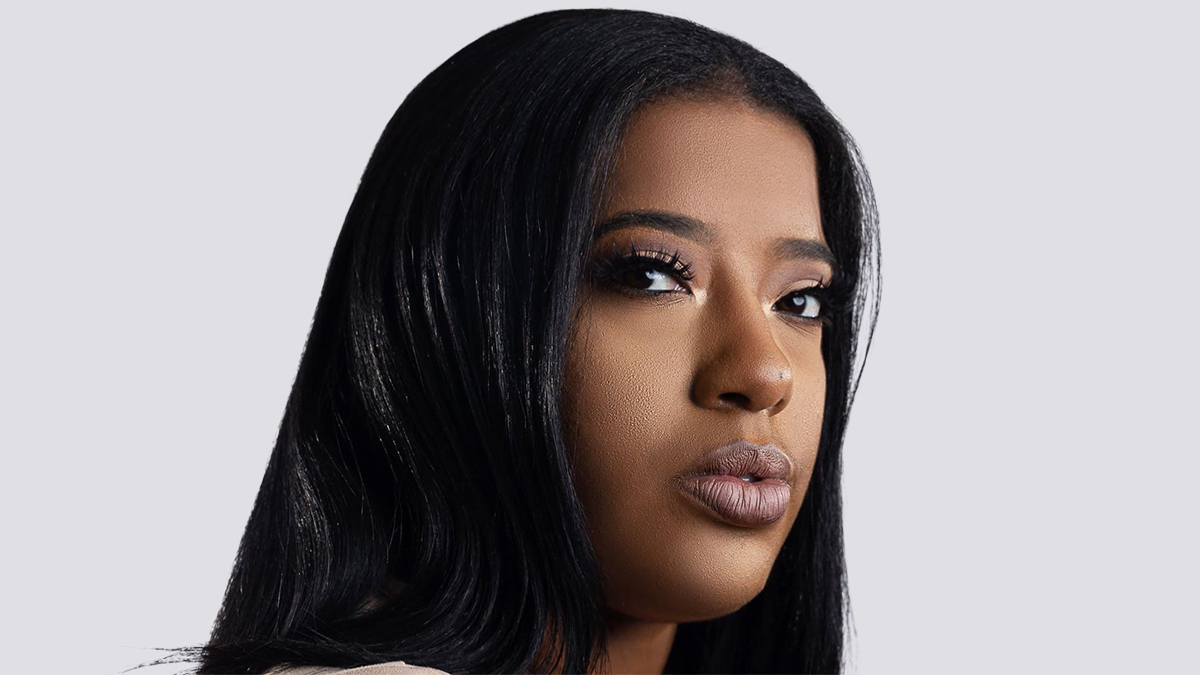
Regan Farley has spent more than 14 years shaping narratives from behind the scenes—exactly where she always intended to be. “I always knew that I wanted to be behind the scenes, pulling the strings,” she says, reflecting on the high school multimedia program where she first learned the mechanics of storytelling. While her classmates focused on design tools, Farley was already studying the architecture of influence. That instinct followed her to Lincoln University—”the first HBCU, heavy on the first”—where student government work introduced her to contract negotiation, external affairs, and the strategic thinking that would define her career.
Her professional journey accelerated in New York City, where she and fellow strategist Deja Cromartie kept hiring each other for independent projects. Two young Black women were hustling, building, and proving themselves—until the obvious became undeniable. “Hey sis, let’s merge these things.” With that, the Kredo Group was born. Today, the firm’s client roster includes Harvard University, the Trap Music Museum, the NAACP, and the Greater Baltimore Urban League, all drawn to Farley’s mission‑driven approach and her ability to build credibility that lasts longer than any headline.
One of the most defining aspects of Farley’s philosophy is her insistence that reputation matters more than momentary publicity. She’s seen too many leaders chase quick hits, only to realize they don’t build trust. “Your reputation is everything… it speaks for you before you get in the room,” she says. For Farley, credibility is the real currency — the thing that compounds over time. “More than just an article… what’s the overall strategy? How are you showing up even when the cameras aren’t on?” It’s a reminder that visibility without substance is just noise and that the strongest brands are built quietly, consistently, and intentionally.
Across education, health equity, culture, and community development, Farley keeps one principle constant: “Foundationally, that organization’s message doesn’t change. It just changes the audience.” She warns leaders against trying to appeal to everyone. “Your message doesn’t have to be for every single person. It just has to be for the right person.” That clarity is part of what makes her one of the most trusted voices in mission‑driven communications.
In a landscape where “authentic storytelling” has become a buzzword, Farley knows what genuine narrative work looks like. “Genuine storytelling connects multi-generations… it transcends time, age, and communities.” A good storyteller, she says, makes you feel like you were in the room—even if you weren’t. It’s a skill she’s honed across industries, cultures, and platforms and one that sets her apart in a crowded field.
Her unique strategic branding and public relations approach is shaped by her journey from Baltimore to Los Angeles, New York, and now Atlanta. “Baltimore made me feel that I can do anything… we have a certain set of charm,” she says. That charm—confidence, adaptability, and cultural fluency—is woven into her work and her ability to make corporate culture feel human. “Culture is wherever people like you and I are… and it is what corporate culture wants to be.”
Looking ahead, Farley sees AI as a defining force in communications — but not a replacement for human strategy. “The next generation is going to figure out how to grasp it… not letting AI control it.” Her advice to emerging communicators is simple: learn the craft, understand the culture, and treat technology as a tool, not a crutch.
Regan Farley is more than a talented publicist — she’s an architect of influence. Her work proves that credibility outlasts virality, culture drives connection, and reputation is the most powerful currency a leader can hold. She isn’t just shaping stories; she’s shaping the future of strategic communications.