


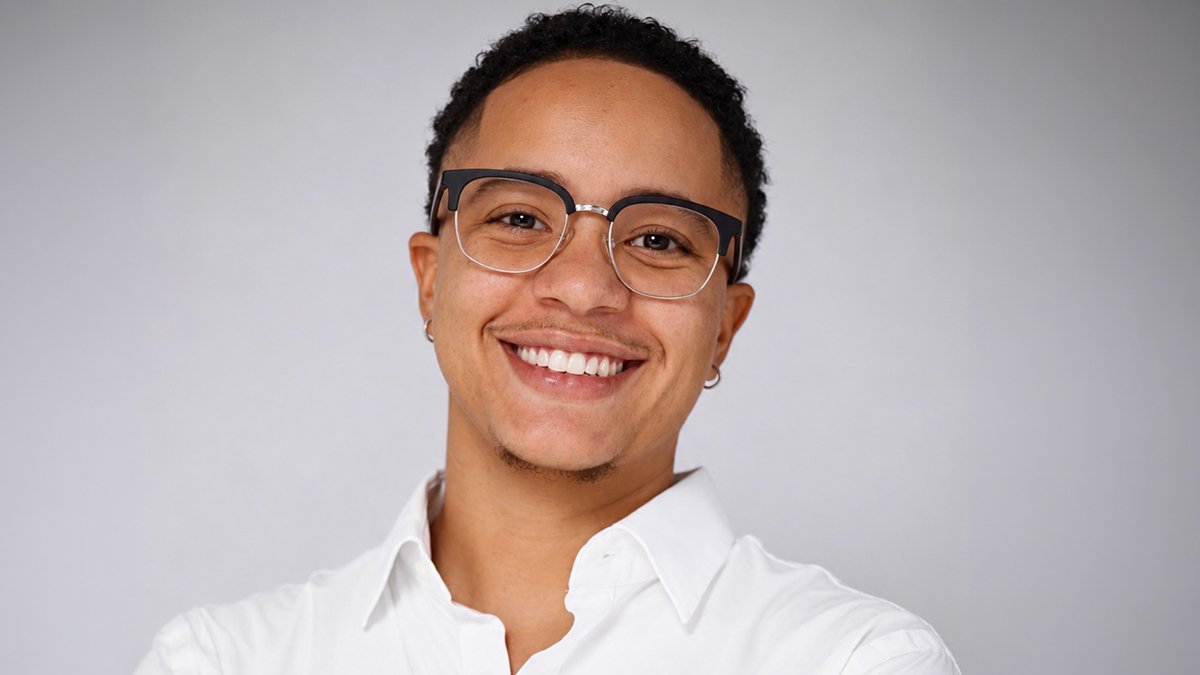
For poet and educator Ylaiza Perez, writing is a means of self-expression, healing, and discovery. Raised in the Dominican Republic, Perez draws from his culture, experiences, and interest in philosophy to explore themes of love, grief, identity, and survival.
In this interview, he discusses this journey into poetry, the challenges of vulnerability, and how teaching has inspired him to pursue his passion while encouraging others to find their voices through writing.
What first inspired you to write poetry, and when did you realize it was something you wanted to pursue seriously?
I was inspired to pursue poetry when I was a child. I spent a lot of time alone because of health issues, so I had time to write and listen to music. I started writing songs, then journal entries, and eventually poetry. In middle school and high school, I had the opportunity to take creative writing classes with Ms. Longo. I’ve been considering pursuing poetry seriously for the past 10 years. More recently, my students have pushed me to pursue my goals. I’m an educator, and working in schools has motivated me to keep going.
How have your upbringing, personal experiences, and cultural background influenced your writing style and the stories you tell through poetry?
Culturally, I try to use both English and Spanish in some of my poems. Even the rhythm of my writing can sound like I’m singing a song. In Spanish, people often use metaphors and alliteration when they speak. I think that carries over into my writing in English, where I use a lot of metaphors.
Who are some of the poets, authors, and creative minds who have influenced your work, and what have you learned from them?
Elizabeth Acevedo, Andrea Gibson, Christopher Poindexter, and Mary Oliver are some of the poets I admire. I also appreciate Paulo Coelho. He isn’t a poet, but I find his writing very existential, and I love philosophy. I’m also influenced by philosophers such as Nietzsche and Sartre. I appreciate the way they think and write. For me, poetry and philosophy go hand in hand.
Tell me about your childhood and the role it played in your journey as a poet.
I was born in the United States but raised in the Dominican Republic. My parents were around, but I grew up with my grandmother. I had a lot of time to reflect and think about things. There’s nothing like being a child trying to find answers, right? Growing up and trying to figure out who I was, writing became an escape. Later, I began to understand its power. In high school, I had a mentor named Jimmy, who was also a family friend. He was always happy and used to tell me about finding happiness in your smile and finding peace through music and writing. After he passed away in a tragic accident, he inspired me to write more and not give up on my dreams.
How do you balance personal vulnerability with the possibility that readers may interpret your work differently than you intended?
I try to be as vulnerable as possible in my poetry. I can be vulnerable without being direct about the emotion I’m expressing in the moment. That’s something I’m working on because I’m so used to writing in a way that carries hidden messages.
Where have you performed your poetry?
I’ve performed at the Nuyorican Cafe, House of Chaos in Brooklyn, schools, and poetry clubs. I also started my own poetry organization in college, and I had the opportunity to pass that legacy on to other students and peers.
Have you ever struggled to write a poem because its subject was particularly personal or emotionally challenging?
I struggle with poems that deal with deeply personal experiences, especially hurt and pain. I can write about love and sometimes pain, but when I’m hurting in the moment, I find it difficult to put those feelings into words clearly.
In a world dominated by social media, music, and digital entertainment, how do you see your poetry connecting with younger generations?
My poetry connects with young people because I write about things they listen to, look for, and talk about all the time. I teach middle school now, and I used to teach high school. Middle school students often talk about who they like and what they’re going through. Love, pain, struggle, loneliness, grief, survival, and figuring things out on your own are all topics that connect with young people because they’re constantly growing.
What do you hope readers discover about themselves or the world around them after experiencing your poetry?
I hope they realize that their lives are canvases, too. We all have a blank canvas, and we have the opportunity to draw, color, or paint whatever we decide, depending on the choices we make.
As you continue to grow as a poet, what do you hope your literary legacy will be?
I hope to write more in Spanish so I can share my cultural connection to my first language. I also hope people understand that writing doesn’t always have to be too sad or too sentimental. There can be a happy medium, and we can write in different ways. Not everyone writes poetry in the same direction or format. Sometimes, when we try to make something perfect, we lose sight of the point and the beauty of why we write.
What can people expect from you in the immediate future?
I hope to write more books, read more, and talk about writing. Eventually, I want to support schools by giving students space to write. I’m a math teacher, and I encourage my students to write in my classroom, even if it’s just an explanation. There’s so much you can learn from writing. You can learn how to speak, learn another language, and understand how other people think. You can also put your own thoughts somewhere without having to share them with everyone. Writing offers a form of expression and can even provide support in a therapeutic way. Not everyone wants to go to therapy, especially in Hispanic communities. I think poetry gives people an opportunity to build their own stories.

